

Agile vs Waterfall: How to Choose a Project Method
Whether a project succeeds depends not only on the team and the budget, but also on the way it is managed. Some projects need a strict order of work and a precise schedule. Others need flexibility and a willingness to change the plan while the work is already under way.
Waterfall and Agile are two opposite approaches to project management, and each has its own strengths and weaknesses. The wrong choice shows up quickly. A team running Waterfall on a product whose requirements change every two weeks ends up rebuilding the same things again and again. A team running Agile on a project with a fixed budget and a hard launch date may discover that the time and money have run out before the product is ready.
In this guide we explain:
- what Waterfall is, what Agile is, and how Scrum and Kanban work;
- the core difference between the two approaches;
- which projects and teams each method suits best;
- how to combine them on a website or software project;
- how to choose a method, which tools to use and which mistakes to avoid.
What Waterfall is: managing a project stage by stage
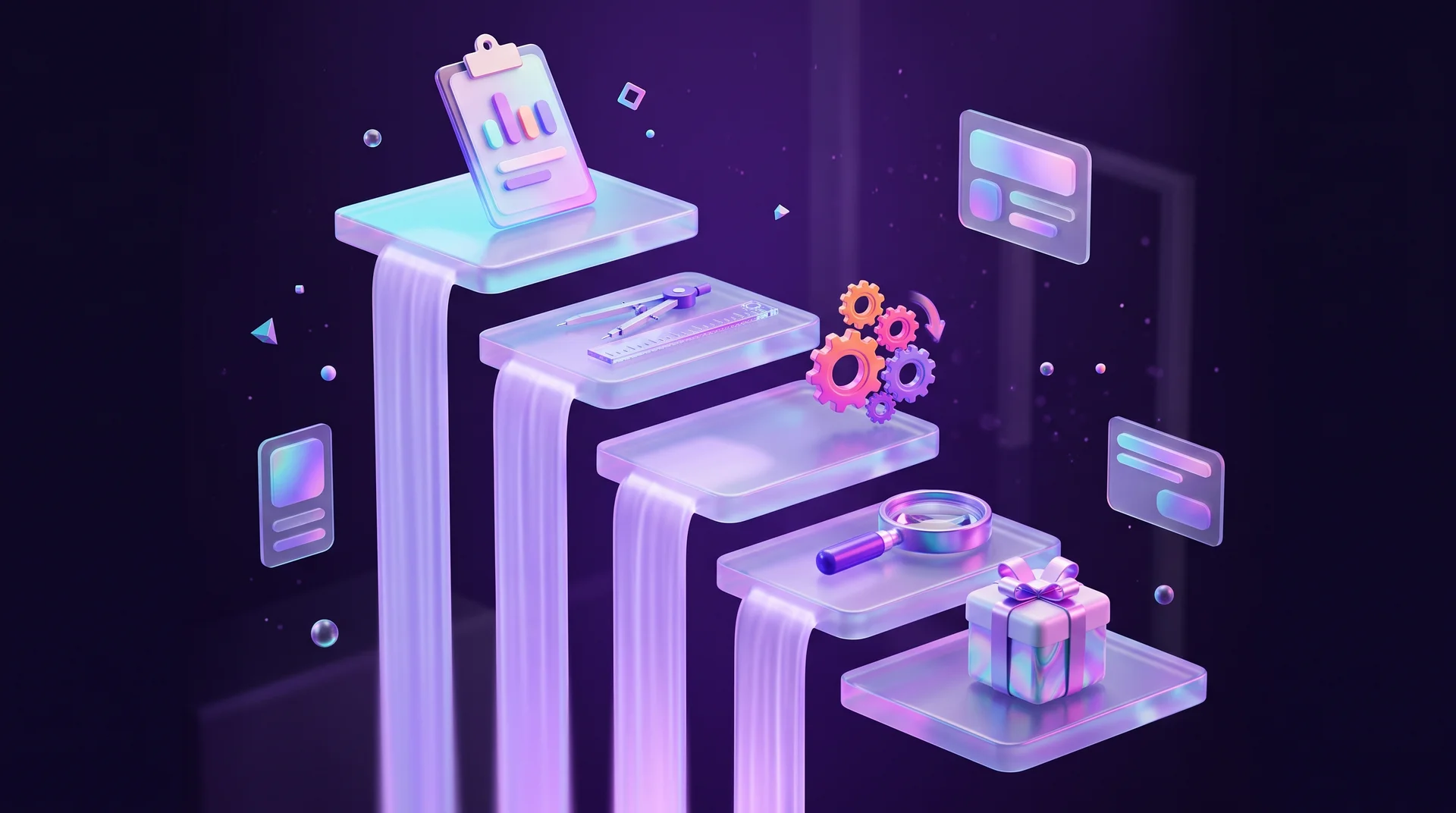
Waterfall is the classic approach to project management. Tasks are carried out in a strict sequence: the next stage starts only once the previous one is fully complete, just like water falling down a cascade from one step to the next and never flowing back up.
What it looks like in practice
In a typical Waterfall project, the team first defines all the requirements, writes a detailed specification and gets it signed off by the client. Then it plans, does the work exactly as specified, tests it, and only at the very end hands a finished product to the client. The usual stages are:
1. requirements gathering and specification;
2. planning and design;
3. execution or development;
4. testing;
5. delivery and rollout;
6. maintenance.
The method relies on thorough documentation at every stage. Changes during the work are very hard to introduce: any correction to the requirements means reviewing every task planned after it, and often the budget and schedule as well.
Pros and cons of Waterfall
The advantages:
- budget, scope and delivery date are known up front;
- resources are easy to plan, and coordinating teams and suppliers is straightforward;
- complete documentation helps with control, audits and knowledge transfer;
- the client does not need to be involved every week.
The disadvantages:
- changes are expensive and slow;
- the client only sees the result at the end, when it is too late to fix misunderstandings about the requirements;
- a mistake made in the specification stage cascades into every later stage;
- in fast-moving markets the product may already be outdated on launch day.
What Agile is: working in short cycles
Agile is a family of methods for managing projects in a flexible way. The idea was set out in 2001 in the Agile Manifesto, written by a group of software developers. It values individuals and interactions over processes and tools, working software over comprehensive documentation, and responding to change over following a plan.
In Agile, the work is split into short cycles, called iterations or sprints, that usually last from one to four weeks. At the end of each cycle the team presents a result: an imperfect but usable version of the product. The team gathers feedback and uses it to plan the next cycle. The team and the client work closely together, and the focus is on delivering value to the client as early as possible instead of waiting for the end of the project.
Scrum: sprints and roles
Scrum is the most popular framework within Agile. Work happens in sprints of a fixed length, and every sprint has a set of regular events: sprint planning, a short daily stand-up, a review where the results are shown at the end of the sprint, and a retrospective where the team discusses what to improve. Scrum defines three roles: the Product Owner, who decides what is most valuable to build next; the Scrum Master, who makes sure the process works; and the developers, who do the work.
Kanban: a continuous flow of tasks
Kanban does not split the work into sprints. All tasks are shown on a board with columns such as "To do", "In progress", "In review" and "Done", and they move from left to right as the work progresses. The key rule in Kanban is to limit the number of tasks in progress at the same time, so that the team finishes work instead of just starting new things. The method works especially well for maintenance, support and marketing teams that handle a steady stream of incoming requests.
Pros and cons of Agile
The advantages:
- you can change direction at any point without tearing the project apart;
- the client sees results within a few weeks and gives feedback while it still matters;
- a first version goes live early and starts delivering value;
- risks surface early, while they are still cheap to fix.
The disadvantages:
- it is hard to give an exact final price and date up front;
- the client has to stay available and involved throughout;
- without discipline, the project tends to grow endlessly;
- it needs an experienced team that can organise itself.

The core difference: how each method treats change
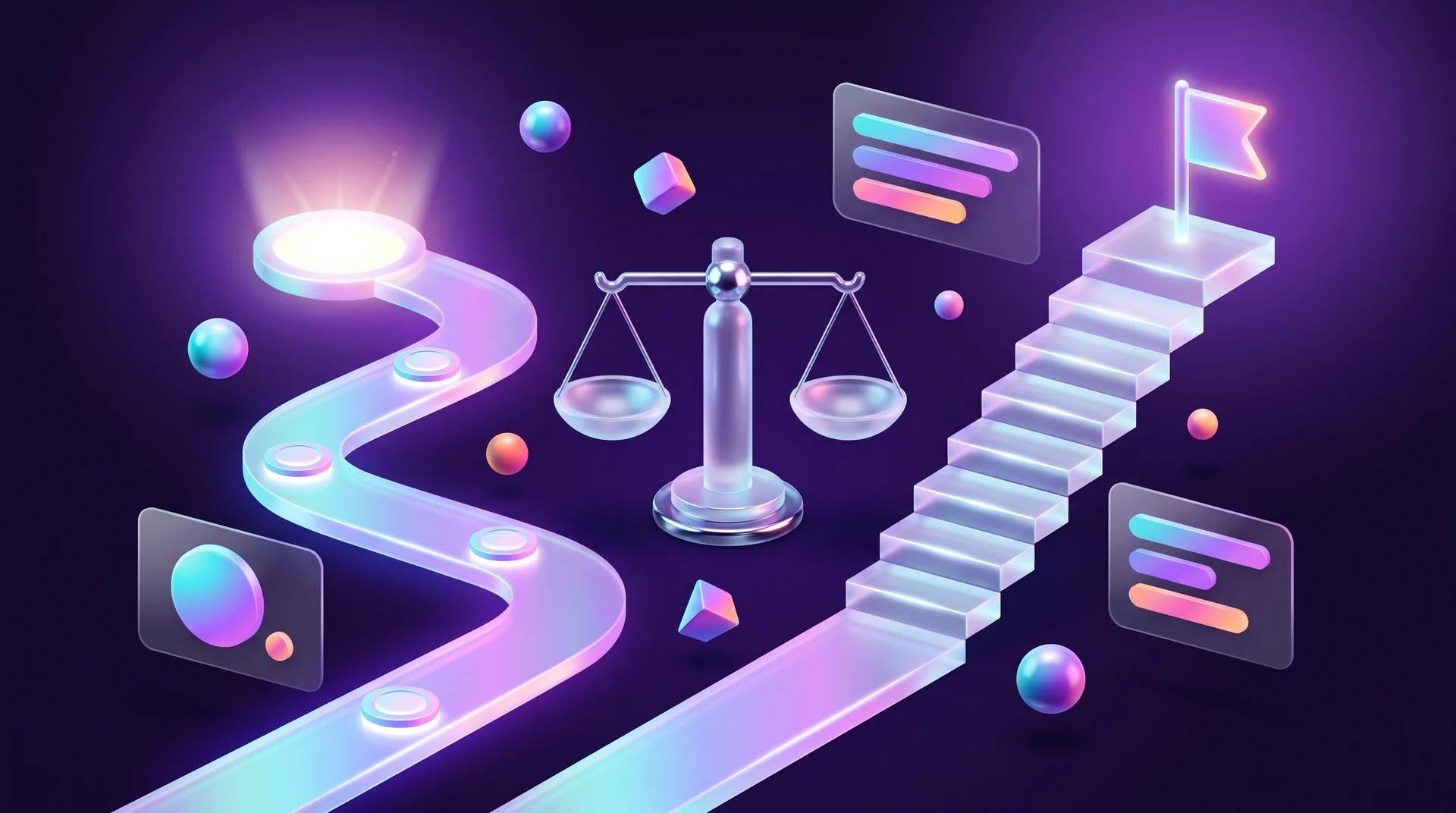
The main difference between Agile and Waterfall is the attitude to change. Waterfall tries to avoid it: all tasks are fixed at the start of the project, and the work follows the plan exactly. Agile, on the other hand, treats change as part of the process: the product is continuously improved and adapted to new conditions.
That is why the two methods also expect different things from the team. Waterfall expects people to carry out precisely defined tasks. Agile expects involvement, initiative and independence.
Here is how the two compare on the main parameters:
- Requirements: in Waterfall they are rigid and defined up front; in Agile they are flexible and updated as you go.
- Budget: in Waterfall it is fixed; in Agile it is flexible or fixed per period.
- Deadlines: Waterfall has one binding delivery date; Agile has small, frequent deliveries.
- Changes to the plan: in Waterfall they are almost impossible once the project has started; in Agile they are possible at any stage.
- Documentation and bureaucracy: a lot in Waterfall, the necessary minimum in Agile.
- Project and team size: Waterfall works at any scale, including very large projects. Agile suits small and mid-sized teams, and large teams are split into several smaller ones.
- Coordination within the team: little is needed in Waterfall, a lot in Agile.
- The client's role: mostly passive in Waterfall, active and involved in Agile.
Which projects and teams each method suits
When to choose Agile
Agile suits projects where you cannot define exactly what the final product will look like, or where the requirements are expected to change along the way. Think start-ups, new products in unsettled markets, or systems built together with their users. Iterative work and regular feedback let you adapt to new requests and improve the product step by step without breaking what has already been built.
Agile is also a good fit when the client wants to see interim results and be an active partner in the process. Areas where the flexible approach works particularly well include:
- SaaS product development;
- mobile and web application development;
- digital marketing and advertising, where messages and audiences are tested and refined based on the data;
- design and UX;
- automation and integrations, where every new workflow is tested on real data before it is rolled out further.
If you are still checking whether there is demand for your idea at all, Agile lets you launch a minimum version and measure the response. We cover this in detail in our guide on how to validate product demand before you invest.
When to choose Waterfall
Waterfall suits predictable projects with a repeatable structure, where the chance of something going wrong is low. There are three main types:
- Projects with a fixed budget and schedule. Construction is a good example: the work plan and the budget must be respected, and overruns in time or resources can cause heavy losses.
- Projects with defined requirements, standards and regulation. For example, developing complex equipment or medical systems, where the full technical specification is set in advance. A structured plan with sign-off at every stage helps manage the risks.
- Large, complex and expensive projects involving hundreds of people. Drug development is one example: many teams have to be coordinated and a large number of different tasks has to be done in the right order.
Industries where Waterfall is more common include construction and infrastructure, manufacturing, pharmaceuticals, and the public sector and public tenders. In the digital world it also fits simple websites with a fixed scope, such as a landing page or a small brochure site.
Which team suits which method
How well either method works depends heavily on the team. Agile asks everyone involved to adapt quickly to new requirements and to communicate efficiently with each other. That makes it a good fit for small teams or departments with experience of working together, mutual understanding and the ability to self-organise.
In Waterfall, each person mainly has to deliver their part according to the plan, which reduces the risk of human error. That makes the method a good fit for new teams that have not worked together before, for large teams and for projects involving several external suppliers.
The hybrid approach: how it works on a website project
In practice, most digital projects do not fall neatly into one category. The client wants to know how much the website will cost and when it will go live, which is Waterfall territory. At the same time, until you see real design and real content, it is hard to decide everything up front, which is Agile territory. That is why many teams work with a hybrid approach.
The discovery phase, Waterfall-style
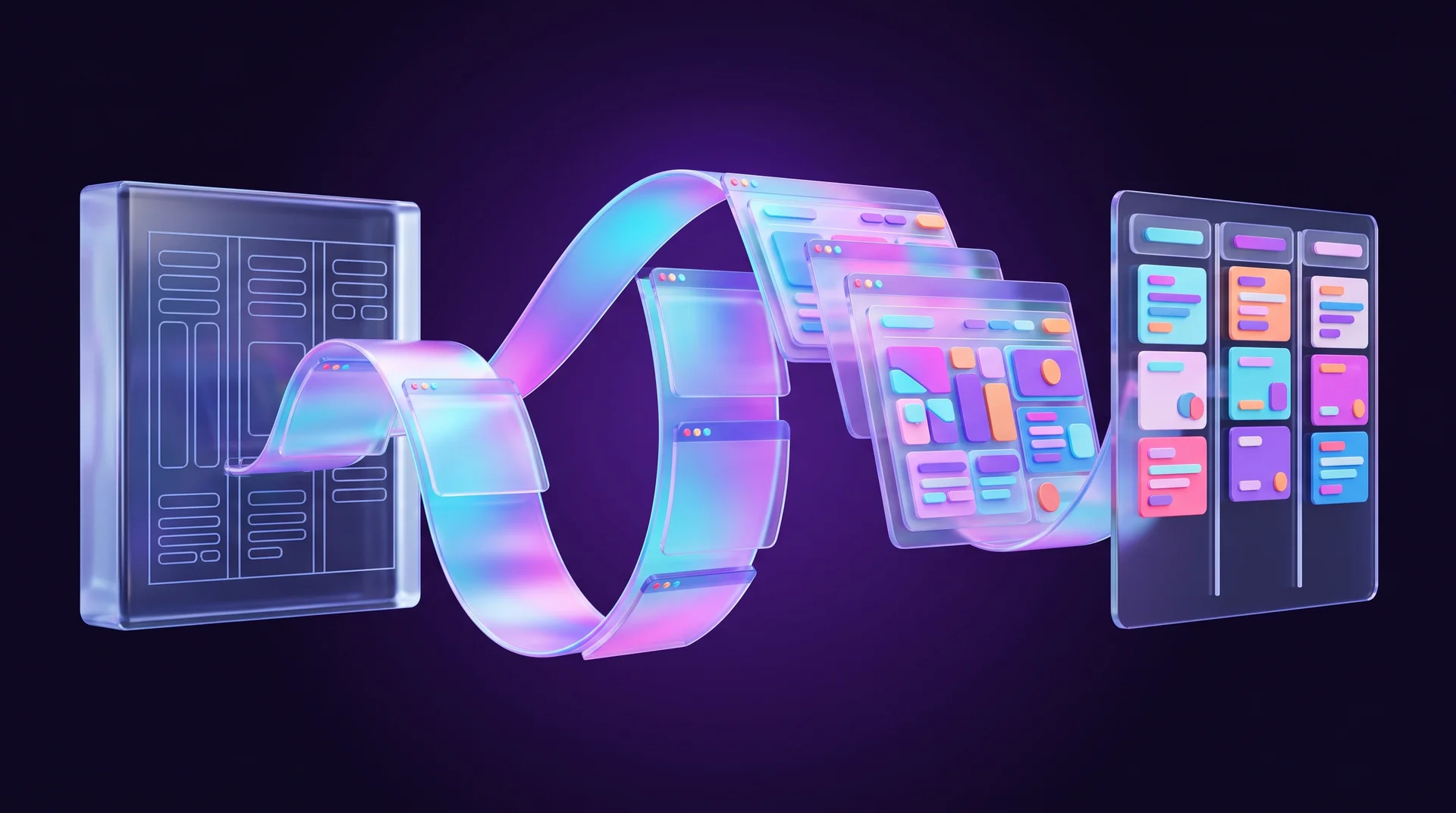
At the start of the project you define everything that has to stay fixed: the goals of the website, the target audience, the page structure, the required integrations, the budget and the timeline. This is also when you build a website wireframe, a sketch of the structure that the client approves before anyone invests in design and development. This way both sides know exactly what is being built and at what price.
Design and development in short cycles
Once the framework is approved, you switch to working in cycles. Every week or two, the client sees real pages in a staging environment: first the home page, then the service pages, the CMS, the forms and the integrations. Feedback is handled straight away instead of piling up into a long list at the end of the project.
After launch: Kanban for continuous improvement
A website is not finished on launch day. After go-live, it makes sense to move to Kanban: a shared task board that collects fixes, new pages, conversion experiments and SEO improvements, and the team works through them in order of priority.
How to choose a method for your project
Eight questions to ask before you start
Answer these questions honestly. If most of your answers lean one way, that is probably the right method for you:
1. Do you already know exactly what needs to be built? Yes: Waterfall. No: Agile.
2. Is the budget fixed and final? Yes: Waterfall. Can it be split into phases? Agile.
3. Is there a launch date that cannot move, such as a seasonal launch or an event? Yes: Waterfall, or Agile with a minimum scope agreed in advance.
4. Could the requirements change because of the market, users or competitors? Yes: Agile.
5. Do you have time to give feedback every week or two? Yes: Agile. No: Waterfall.
6. Is the project subject to regulation or strict standards? Yes: Waterfall.
7. How many people and suppliers are involved? Many: Waterfall, or a split into small teams. A small team: Agile.
8. Has the team worked together before? Yes: Agile will work better. A new team: Waterfall is safer at the start.
Project management tools
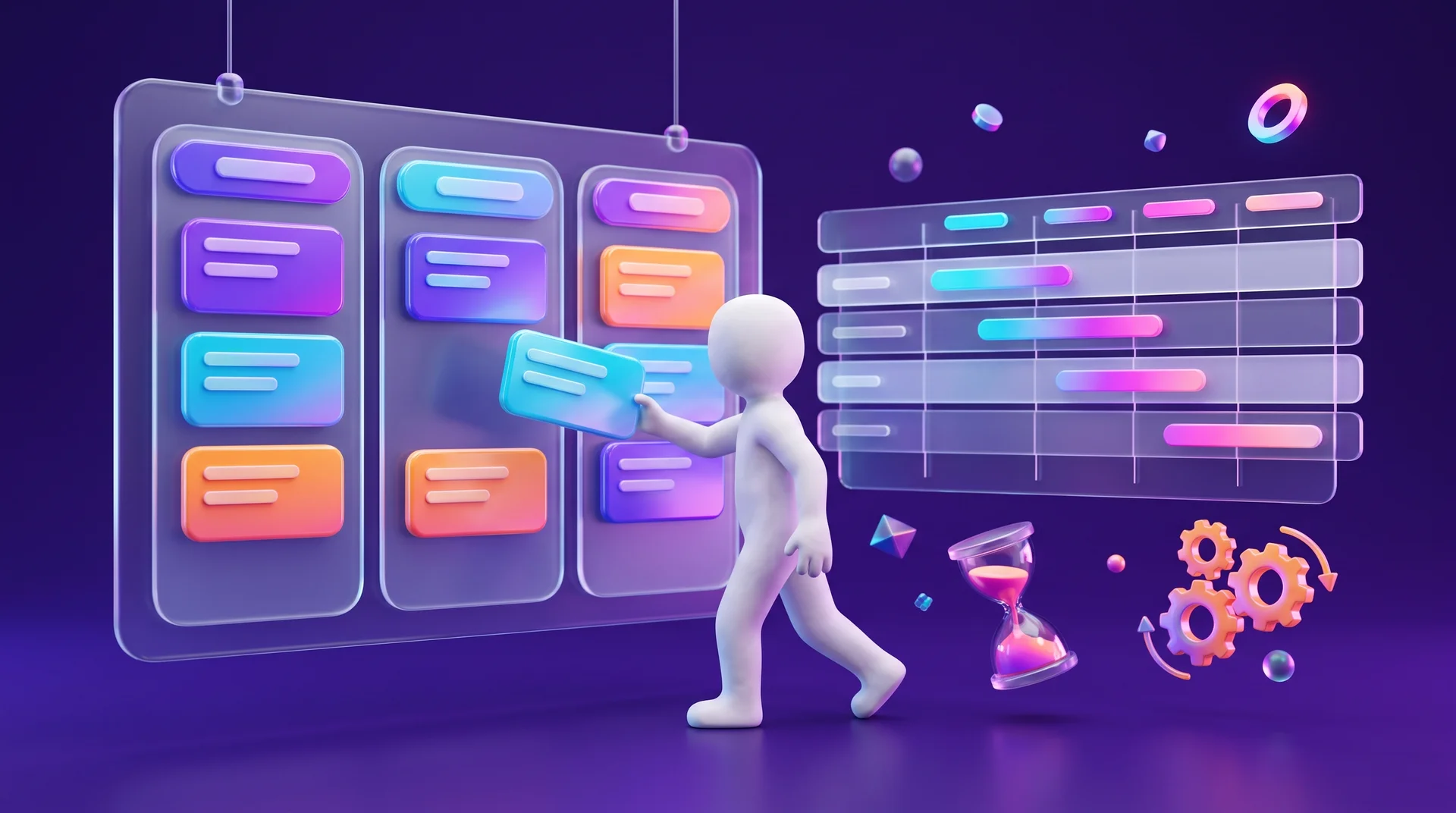
A good method needs a tool that supports it. Today's popular tools offer both Kanban boards and timeline (Gantt) views, so you can use the same tool whichever method you choose:
- monday.com, a flexible work management platform with boards, Gantt charts and built-in automations;
- Jira by Atlassian, the standard for development teams that work in Scrum;
- Asana and ClickUp for mixed teams of marketers, designers and developers;
- Trello for simple Kanban boards;
- Linear for product and engineering teams that want a fast, minimalist tool;
- Notion when you want documentation, specifications and tasks in one place.
Most of these tools can be connected to your CRM, your website forms and your communication channels, so that a new client request automatically becomes a task on the board. We explain how to set up connections like this in our guide to n8n automation for business.
Common mistakes when choosing a management method
Calling it Agile, but with no plan at all
Agile does not mean "no planning". There is planning for every sprint, a clear order of priorities and a clear definition of when a task counts as done. When the word Agile is used as a way to avoid committing to anything, the project drags on, the budget erodes and the client loses trust.
Insisting on Waterfall when the requirements are still unclear
If the business owners are still unsure what exactly they want, a hundred-page specification will not solve that. It will only postpone the debate to the end of the project, when every change costs the most.
Copying rituals without understanding why they exist
Daily stand-ups, retrospectives and story points do not make a team agile on their own. A team of three people building a brochure website does not need the full Scrum machinery. Take from the method only what solves a real problem for you.
The client is not available for feedback
The whole advantage of Agile disappears if the client replies to feedback requests three weeks later. Before you choose a flexible approach, agree in advance who signs off, how often and how quickly.
Not defining what is in scope and what is not
With either method, it is important to write down what the project includes and what will count as an extra. Without that, in Waterfall every small request turns into a dispute, and in Agile the backlog just keeps growing and never ends.
How RJL Studio manages website and automation projects
At RJL Studio we use a hybrid approach. We start with a short introductory call and a discovery phase: goals, structure, integrations, timeline and a clear quote. Then we build the website in short cycles, so you see real progress in a staging environment instead of waiting for a surprise at the end. After launch we continue with support and improvements based on a shared list of priorities.
This is how we run our Webflow website projects, and it is also how we run automation and integration projects, where every workflow is tested on real data before we scale it up.
Have a project but not sure how to manage it? Get in touch and we will help you put together a work plan that fits your budget and your pace.
Frequently asked questions
What is the main difference between Agile and Waterfall?
In Waterfall you plan the whole project up front and carry it out stage by stage, and changes along the way are expensive. In Agile you work in short cycles, show results often and adjust the plan based on feedback. Waterfall gives you certainty about price and deadline, while Agile gives you flexibility.
Are Scrum and Agile the same thing?
No. Agile is an approach, a set of principles for working flexibly. Scrum is a specific framework within Agile, with sprints, roles and regular events. Kanban also belongs to the Agile family, but it works as a continuous flow without sprints.
Which method is best for building a business website?
For a simple website with a clear scope, such as a landing page or a small brochure site, Waterfall works well. For a website with a CMS, integrations or an online store, a hybrid approach is usually the right choice: discovery and budget agreed up front, and development in short cycles with regular feedback.
Can you get a fixed price on an Agile project?
Yes, if you limit the scope. You can agree a fixed price for the first version with a defined list of features, and then price further improvements per sprint or by the hour. That gives you certainty about the launch and flexibility about what comes after it.
Which tool should you use to manage a small project?
A small team only needs a simple tool with a Kanban board, such as Trello, monday.com or Asana. It matters more that everyone involved, including the client, works on the same board and keeps it up to date than that you pick the tool with the most features.
Disclaimer: blog content is for general information and learning only and is accurate as of its publication date. It is not professional, legal, financial or business advice, nor a recommendation or call to take any action. Any use of this information is at the reader's own risk, and we accept no liability for any resulting loss. Links to external websites and tools are provided for convenience only. We recommend consulting a qualified professional before making decisions.