


Target Audience: How to Define, Segment and Build Personas
A business that knows its customers beats the competition with more than discounts and promotions. Say you run a coffee shop. If you know who your guests are, who drops in for a strong espresso on the way to work and who settles in for an hour with a cappuccino and a laptop, you can offer each of them something that is hard to turn down.
The same principle works on your website, in your campaigns and in sales. When it's unclear who you are talking to, the copy becomes too generic, the budget gets spread across people who will never buy, and the website talks about what matters to the business owner rather than what matters to the customer.
In this guide we cover:
- what a target audience is and why you need to research it;
- how to split a target audience into segments;
- what to consider when your audiences span different markets and languages;
- which sources to collect customer data from;
- how to build a buyer persona step by step, with a practical example;
- how to use personas on your website, in advertising and in content, and which mistakes to avoid.
What a target audience is and why you need to know it
A target audience is a group of people with shared characteristics and needs for whom your product or service is a good fit. Put simply, it's everyone who has a realistic chance of becoming a customer.
You research your target audience in order to:
- understand what matters to potential customers and present your product in a way that gets their attention;
- choose your channels, for example which social networks to advertise on and which search queries you want to appear for on Google;
- plan sales, because knowing the size of your audience helps you forecast results;
- build a website that answers visitors' questions instead of simply describing the business.
In short, audience research tells you what to sell, to whom, when, how and where. Without it, even a well-funded campaign and a beautiful website work far less well than they could.
This isn't only a job for marketers. Business owners, product managers, UX designers, content writers and campaign managers all rely on the same knowledge. And in a small business, all of those roles are often one person.
There's a deeper reason too. Many businesses fail because the product doesn't meet market expectations. A common trap is the thought "this interests me and my friends, so it will interest everyone else". Researching your target audience helps you check what the market actually needs before you commit a large budget.
Types of target audience: how to segment
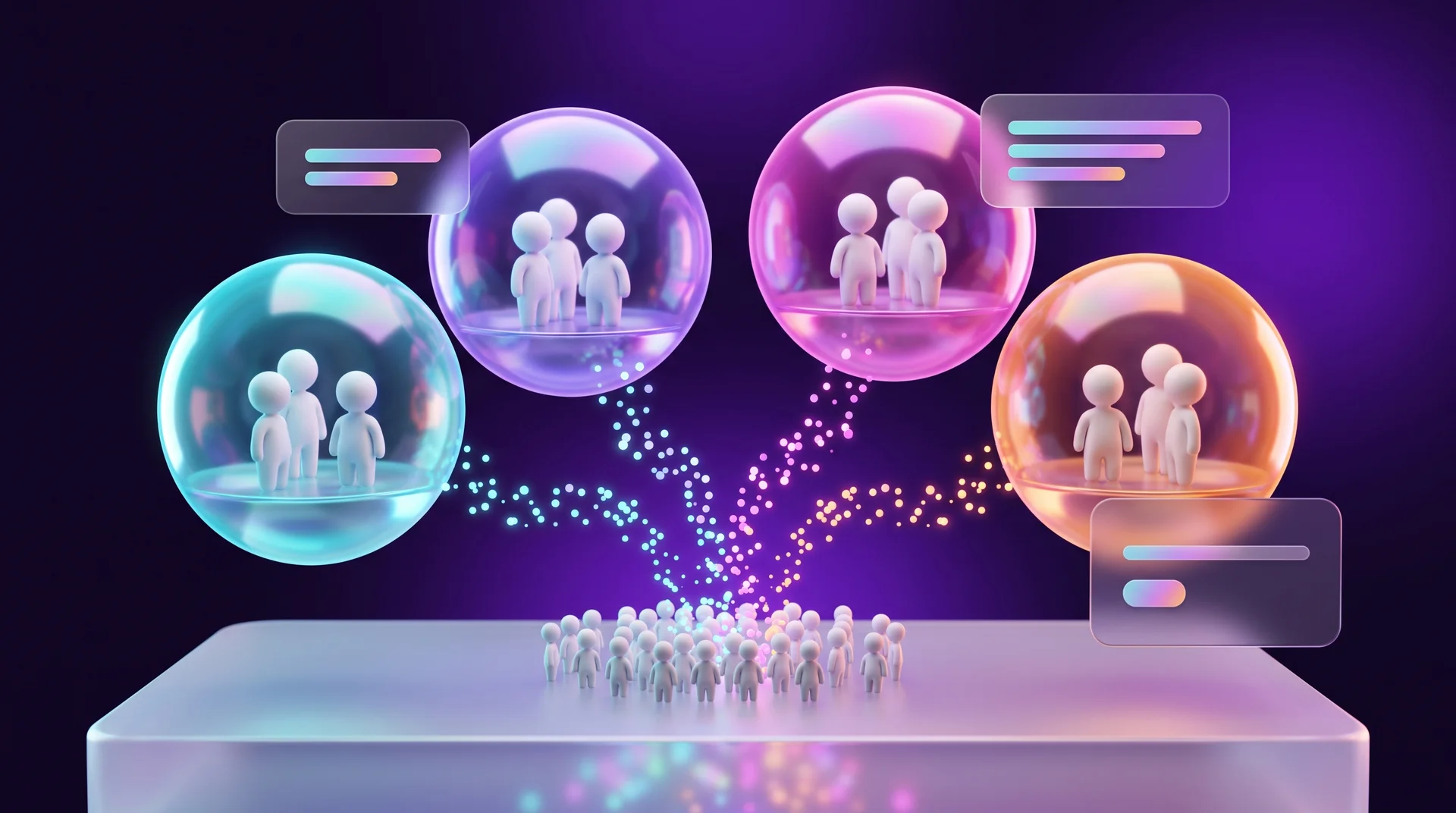
A target audience is almost never uniform. The same product can suit people with different interests, priorities and life circumstances. That's why you divide the audience into segments, smaller and more clearly defined groups, and build a separate message for each.
By role in the purchase
The direct audience is the person who decides and pays. For example, a parent buying insurance for a child. With them you talk about benefits and risks and explain why it makes sense to decide now.
The indirect audience influences the choice but doesn't pay: a fitness coach recommending running shoes, an accountant recommending bookkeeping software, or an IT manager who reviews a system before management signs off. With them you build trust, expertise and proof.
By customer type
Consumers (B2C) usually decide relatively quickly. Convenience, emotion and the feeling that the result will come straight away matter to them. So messages aimed at them highlight a quick win, a free trial or a discount on the first order.
Businesses (B2B) go through a longer decision cycle, and several people are often involved. They value rational benefits: time and cost savings, reliability, data security and integration with the systems they already use. A CRM vendor, for instance, will pitch a sales team on connecting website forms and WhatsApp so that no lead slips through the cracks.
Public sector organisations follow procedures and tenders. With them you emphasise compliance with standards, data security, accessibility and full support throughout the project.
By stage of the relationship with the brand
- Prospects are only just getting to know the product. You need to explain the benefits and remove doubts, and the best way to do that is to let them try it.
- Existing customers already use the product. The goal is to keep them engaged and show them how to get more out of it, for example with tips, updates and reminders about useful features.
- Loyal customers trust the brand. You build the relationship with them through a loyalty programme, a members-only newsletter, early access to new features and a referral scheme.
- Lapsed customers bought in the past and stopped. To win them back, you remind them what has changed and make them a personal offer.
Each segment needs its own approach. An online graphic design tool, for example, will offer a prospect a trial period. The prospect designs a few posts, sees that the tool works and moves to a paid plan. To a customer who left six months ago, the same service will instead send a round-up of the new features.
Other segmentation criteria
- Demographics: age, gender, income, education, family status.
- Geography: region, city, neighbourhood, distance from the business.
- Psychographics: values, motivation, lifestyle, pain points.
- Behaviour: purchase frequency, average order value, response to promotions, stage in the buying journey.
- Purchase context: use case, urgency, seasonality.
Which criteria matter is decided case by case. For one product, age is critical because teenagers and adults use it in completely different ways. For another, age hardly matters at all and urgency is what counts: someone looking for a plumber at seven in the morning doesn't compare ten quotes.
Audiences across markets: what to take into account
Many businesses today sell beyond a single city or country, and even a local market can be surprisingly diverse. A few things are worth checking right at the definition stage.
Language. Some of your customers may prefer a language other than the one your website is written in. In smaller multilingual markets, a business can easily serve customers in three or four languages. If a significant segment speaks a different language, it may need its own version of the website, a campaign in its language and someone who can reply in it. Machine-translating an ad isn't enough: the examples, the tone and sometimes even the channel change too.
Channels. In many countries WhatsApp is a primary channel, and plenty of people would rather send a message than fill in a form. Instagram, Facebook, TikTok and LinkedIn attract different audiences, and in some communities WhatsApp groups, Telegram channels or local media matter more than any social network.
Mobile. A large share of browsing happens on phones, so your persona most likely meets your website on a small screen, on the move and between other tasks.
Seasonality. Public holidays, the summer break, Black Friday and stressful periods in the news all change how your audience behaves. Mark on your calendar when your customers buy and when they are simply unavailable. If you work across several countries, remember that holidays and school calendars differ between them.
Accessibility. Some of your audience uses screen readers, text zoom or keyboard navigation. In the EU, the European Accessibility Act has applied since June 2025 to many digital products and services, including online shops. A website built to WCAG guidelines doesn't just reduce legal risk; it also serves customers your competitors are missing. This is general information, not legal advice.
How to analyse your target audience: data sources
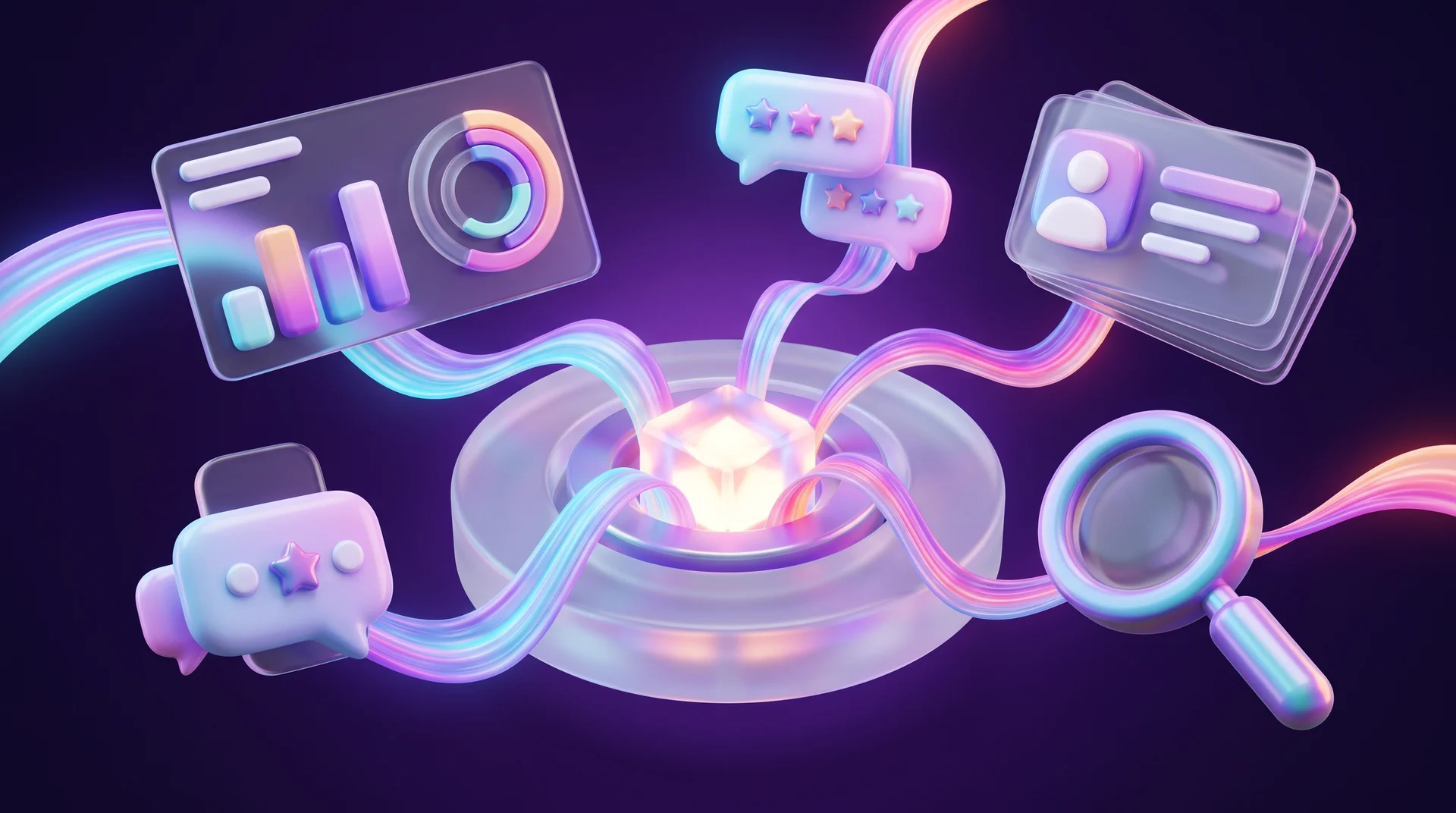
To know what to offer and how to talk about it, you first need to understand who these people are: where they are, what they need and what they pay attention to when they choose. To get there, you collect your own data and fill the gaps with research.
Internal data
Almost every business already has data; it just doesn't always look at it:
- Google Analytics 4. Shows where visitors come from, which devices they use, which pages they read and where they drop off. If you enable Google signals, you also get general demographic data such as age ranges and interests, but only once you have enough traffic.
- Google Search Console. Shows which search queries people use to find your website. It's one of the simplest ways to hear the words your customers actually use.
- CRM. Shows who buys, what, how often, what the average order value is and at which stage deals get stuck. If you don't have a proper system yet, read our guide on how to choose a CRM for your business.
- Reviews and support requests. Google reviews, WhatsApp messages and phone questions reveal recurring problems, fears and motivations, as well as the exact words customers use.
- Your sales and support team. They hear from customers every day. Half an hour of conversation with them is often worth more than an entire report.
Additional research
When internal data isn't enough, add research:
- In-depth interviews. One-to-one conversations of 20–40 minutes with customers to understand which problem the product solves for them, what pushed them to buy and what nearly stopped them. A handful of good interviews usually reveals most of the recurring patterns.
- Focus groups. A group interview in which customers discuss the product or the problem while a moderator follows the reactions. Useful when you want to hear how people talk about the topic with each other.
- Surveys. A short questionnaire in Google Forms, Typeform or your email marketing tool. Ask about actual behaviour ("When did you last buy and why?") rather than intentions ("Would you buy?").
Competitor analysis
Look at what your competitors offer and how their audience responds: the Meta Ad Library shows which ads they are running, and Google reviews show what their customers complain about. This is also how you spot an important topic that no competitor is talking about.
For example, a sports nutrition brand might discover that everyone talks about intense training and almost no one talks about recovery. That's a gap you can build an entire campaign around. For a structured way to make this kind of comparison, see our separate guide to SWOT analysis for business.
How to build a buyer persona
A persona is a description of one person who represents a segment: where they live, which problem they are trying to solve, what interests them, what they do for a living, and how and where they consume content. You shape your communication with that segment around this description.
A single persona for your whole audience is a mistake. Each segment has its own motivations, concerns and circumstances, so you build a persona for each important segment. Two to four personas are enough for most businesses.

Step 1: Collect facts, not guesses
Look at the numbers in your analytics and CRM, the questions that keep coming up in support, the reviews and short conversations with customers. This is how real scenarios come to light, along with the words your customers actually use.
Step 2: Describe the person and the moment of choice
Who are they at the moment of purchase: the one who pays or the one who recommends? What state are they in when they choose: under pressure, out of curiosity, after a recommendation? Instead of "woman, 25–45", write down which task she is trying to get done and why it matters to her right now.
Step 3: Spell out needs and obstacles
State clearly which result the person expects and what is holding them back: price, time, complexity, fear of making a mistake or a lack of trust in suppliers. These answers become the arguments on your home page, the answers in your FAQ and the script for your sales call.
Step 4: Identify motivations and triggers
What usually pushes the customer to act: a deadline, a guarantee or money-back promise, an expert's recommendation, a promotion, a life event such as moving house or starting a business? A list of such events and signals helps you time campaigns and choose messages.
Step 5: Note where they spend time and how they consume content
Which social networks are they active on? Do they search on Google or ask friends? Do they read long articles or watch short videos? Which language and tone do they feel comfortable with? This determines where you advertise and how you write.
Step 6: Test and update
A persona can only be validated in the real world: try different wording, track the responses and adjust. Revisit it at least every six months, and whenever something significant changes in the market, the product or the price.
A persona example you can use as a template
To see what a real persona looks like, here is a fictional example for a business that builds websites for small companies. From this description, it's clear what to offer this kind of person and how to talk to them.
Nick, 44, owns a small renovation company in a mid-sized coastal city. The company has six employees. Most of the work comes through referrals, but over the past year referrals have dropped, and Nick realises he also needs leads from the internet. He has a Facebook page and an old website that a relative built a few years ago, and he isn't sure anyone ever visits it.
When he decides: in the evening, on his phone, after a day on site. He compares several quotes, looks at previous work and asks for recommendations in a WhatsApp group of contractors.
What he wants: a website that brings in enquiries from serious customers in his area, with a project gallery and a WhatsApp button. He wants a clear price upfront and someone who will answer the phone after launch, too.
What he's worried about: "I'll pay a lot and nobody will visit the site", "I won't understand what they've done", "they'll disappear once they've been paid". He has no patience for jargon without an explanation.
What works for him: a proposal with stages and dates, examples of websites for similar businesses, a simple explanation of how enquiries are measured, a short introductory phone call rather than a two-hour meeting, and proper support after launch.
Note that there are no statistics and no list of hobbies here. There is a situation, a goal, concerns and channels. From this you can write a service page, an ad and a sales call script.
How to use personas on your website and in campaigns
A persona that sits in a folder isn't worth much. Its value starts when it changes decisions.
On your website and landing page
The main headline answers the persona's core need, the following sections address their concerns in order, and the call to action matches the way they like to get in touch: WhatsApp, a phone call or a short form. In UX/UI design projects, personas are also the basis for page structure and for the user scenarios tested before development.
In paid advertising
A persona helps you choose audiences and messages. On Meta you can work with Custom Audiences built from customer lists and website visitors, with Lookalike Audiences, and with Advantage+ audience, where your persona acts as a suggestion to the algorithm rather than a hard limit. On Google you work with search terms that match the decision stage, with Customer Match and with intent-based audiences. Each segment deserves its own ad that speaks to its specific need. We go deeper into this in our guide to personalised advertising.
In content and organic search
Every question that comes up repeatedly in customer conversations is a topic for a page, an article or an FAQ answer. When content is written in your persona's language, it also works better for Google and for AI-powered answer engines.
In email marketing and sales
Your sales team gets ready-made answers to common concerns, and emails are sent by segment: a new customer gets onboarding, a loyal customer gets a perk, and a lapsed customer gets a reason to come back.
When you collect customer data for segmentation, keep data protection rules in mind. In the EU, the GDPR requires you to collect only what you need, tell customers why you are collecting it and store it securely, while the ePrivacy rules generally require prior consent for marketing emails, with limited exceptions for existing customers. This is a general overview, not legal advice.
Common mistakes when defining a target audience
An invented persona
A persona has to be built from real data; otherwise you end up with a collection of words that serves no purpose. A good persona answers the question of what matters to the person and how the product meets a real need of theirs. Imagination, however logical it sounds, is usually far from reality.
Focusing only on demographics
"Woman, 27, loves coffee and runs in the mornings" says nothing about what really bothers her or what the product can give her. Age, gender and city influence behaviour, but they don't determine it. It's much more important to understand which need, which emotional state and which circumstances bring a person to you.
Clichés instead of insights
"He wants to succeed" or "she only chooses the best" sounds nice, but it doesn't explain any motivation. These are generic phrases you could attach to any person and any product.
"Everyone is our target audience"
When a message tries to speak to everyone, it speaks to no one. Even if the product genuinely suits many people, pick a first segment, win it and only then expand.
A persona that never gets updated
Markets, prices, channels and even search habits change fast. A persona built two years ago and never checked since can steer all of your marketing in the wrong direction.
To avoid these mistakes, focus on the person's situation at the moment of choice: what they feel, what they fear, what they are looking for and how they decide.
How RJL Studio helps you reach the right audience
At RJL Studio we start every project by asking who it is for. Before we design a website or launch a campaign, we go through your existing data in analytics, Search Console and your CRM with you, define the segments that matter and build personas that serve as the foundation for the site structure, the copy and the ads. Then we set up measurement so you can see which segment actually brings in enquiries and sales, and improve accordingly.
If you want a website or a campaign that speaks directly to the right customers, take a look at our campaigns and social marketing and UX/UI design services, or get in touch for a short introductory call.
Frequently asked questions
What's the difference between a target audience and a persona?
A target audience is the whole group the product suits, often made up of several different segments. A persona is a detailed description of one person who represents a particular segment: what they need, what they fear, how they decide and where they spend their time. Usually you build a separate persona for each important segment.
How many personas does a small business need?
Two to four personas are enough for most small businesses. Start with the segment that brings in the most revenue or has the most potential, and build a data-based persona for it. One accurate persona that people actually use is better than ten that nobody reads.
How do you define a target audience for a new business with no data?
Start with a hypothesis and test it quickly: talk to ten to fifteen potential customers, read reviews of competitors, check their ads in the Meta Ad Library and look at search queries on Google. Then run a small campaign with a few different messages and see who responds. Over time, this data will replace your assumptions.
How often should you update a persona?
At least every six months, and also after any significant change: a new product, a price change, entering a new market or language, or a sharp drop in campaign results. A good sign that it's time is when your sales team starts hearing questions and concerns that aren't in the persona.
Can you use AI to build a persona?
Yes, but as an assistant. Tools such as ChatGPT, Claude or Gemini can help you summarise interviews, sort reviews and draft a persona from your own data. They don't replace conversations with real customers, and a persona that AI "made up" without data is exactly the invented persona you should avoid. Don't upload personally identifiable customer data to these tools without checking their terms of use and privacy policies.
Disclaimer: blog content is for general information and learning only and is accurate as of its publication date. It is not professional, legal, financial or business advice, nor a recommendation or call to take any action. Any use of this information is at the reader's own risk, and we accept no liability for any resulting loss. Links to external websites and tools are provided for convenience only. We recommend consulting a qualified professional before making decisions.