


Personalized Advertising: How It Boosts Sales and How to Get Started
One ad for the whole audience sounds economical: one creative, one campaign, one budget. In practice, it is usually the most expensive ad you can run. Different people buy for different reasons, and a message that tries to speak to everyone rarely convinces anyone all the way. Personalized advertising solves this: instead of one generic message, the business builds several precise ones, and each customer group gets the message that is relevant to it.
According to McKinsey research, personalization typically lifts revenue by 10–15%. That does not happen on its own: the result depends on data quality, the right segmentation and continuous testing.
In this guide we cover:
- what personalized advertising is and why it works;
- how to collect customer data without breaking privacy laws;
- how to segment your audience and build creative for each segment;
- how to test and improve campaigns across the whole funnel, not just by CTR;
- which AI tools help you do all this, even as a small business;
- what to know about privacy and anti-spam rules, and which mistakes to avoid.
What personalized advertising is and why it works
Personalization means tailoring a product, service or communication to the needs and preferences of a specific person or group of people. In advertising, it means that instead of one ad meant for the entire target audience, the brand creates separate messages for defined segments. These messages take into account the group's demographic and behavioral traits, its interests, its motivations and where it is in the buying journey.
It is important to distinguish between two levels. The first is segment-based personalization: three or four versions of a message, each for a different group. The second is dynamic personalization: the system assembles the ad in real time from a product catalog or a pool of headlines and images, based on what the user has seen or done. Most small businesses start at the first level, and that is perfectly fine.
Why a personalized ad sells more
- It gets noticed. People scroll fast and skip whatever does not concern them. An ad that speaks to their specific problem stops the scroll.
- It brings quality clicks. Someone who clicks on a precise message already knows what they will get, so they keep going on the landing page.
- It cuts noise. Relevant advertising is perceived as an offer, not a nuisance, and that also shapes how people see the brand.
- It saves budget. Fewer wasted impressions on people who are not a fit, more inquiries for the same money and a lower cost per lead.
Personalization used to be mostly the domain of large companies with data teams. Today, ad platforms, CRM systems and AI tools have made it accessible to small businesses too, sometimes even to an owner who runs the campaigns alone.
Step 1: Collecting customer data
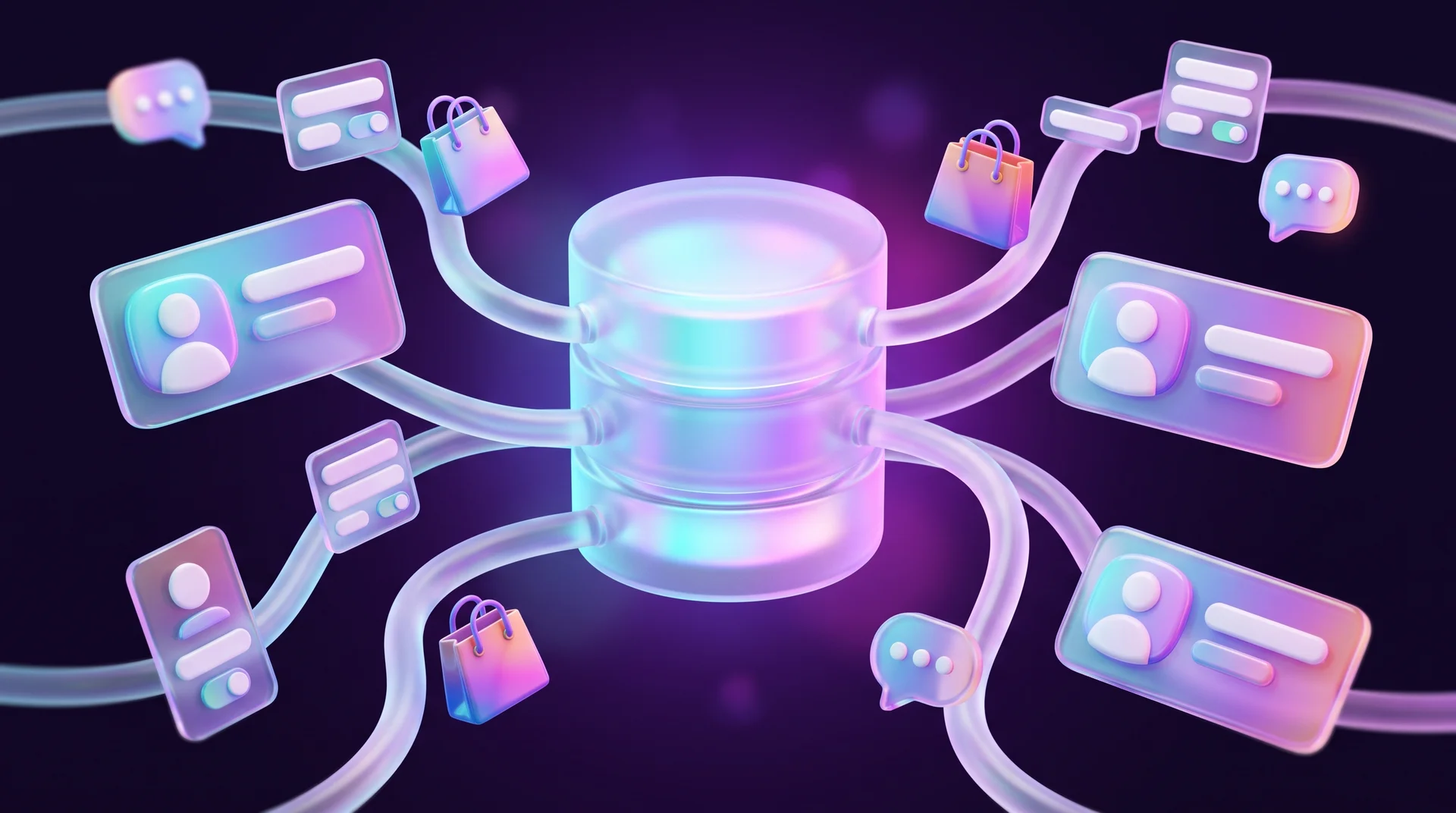
Data is the foundation of any personalization. Without understanding who your customers are, there is nothing to tailor the message to. So the first step is to build a structured data collection process.
Where the data comes from
- A CRM system. The most accessible tool. It stores contact details, purchase history, inquiries and deal stage. If you do not have one yet, read our guide on how to choose a CRM for your business.
- Website analytics. Google Analytics 4 shows where visitors come from, which pages they read and what they do before leaving their details.
- Ad platform pixels. The Meta Pixel together with the Conversions API, and the Google Ads tag, send the platforms information about on-site actions so they learn who converts.
- Forms, WhatsApp and loyalty programs. Every question in a form ("What type of property are you looking for?") is a data point you can use for segmentation.
- Online store and POS system. What customers bought, how often, for how much and when they last purchased.
Your own data is worth more
Browsers like Safari and Firefox block third-party cookies by default, and many iPhone users opt out of app tracking. That makes the data a business collects itself, with customer consent (first-party data), its most valuable asset. A clean customer list in your CRM is worth more today than any targeting option on a platform.
The more information you have, the more precise the message can be: purchase history lets you recommend similar products, the last purchase date tells you when to remind people it is time to renew, and the traffic source shows which channel brings better customers. The key is connecting all sources into one picture, which is exactly what end-to-end marketing analytics does.
Consent and transparency
Data collection has to be transparent. Tell customers what is collected and why, ask for consent to marketing emails and give them a simple way to unsubscribe. We cover the specific rules in more detail below.
Step 2: Audience segmentation
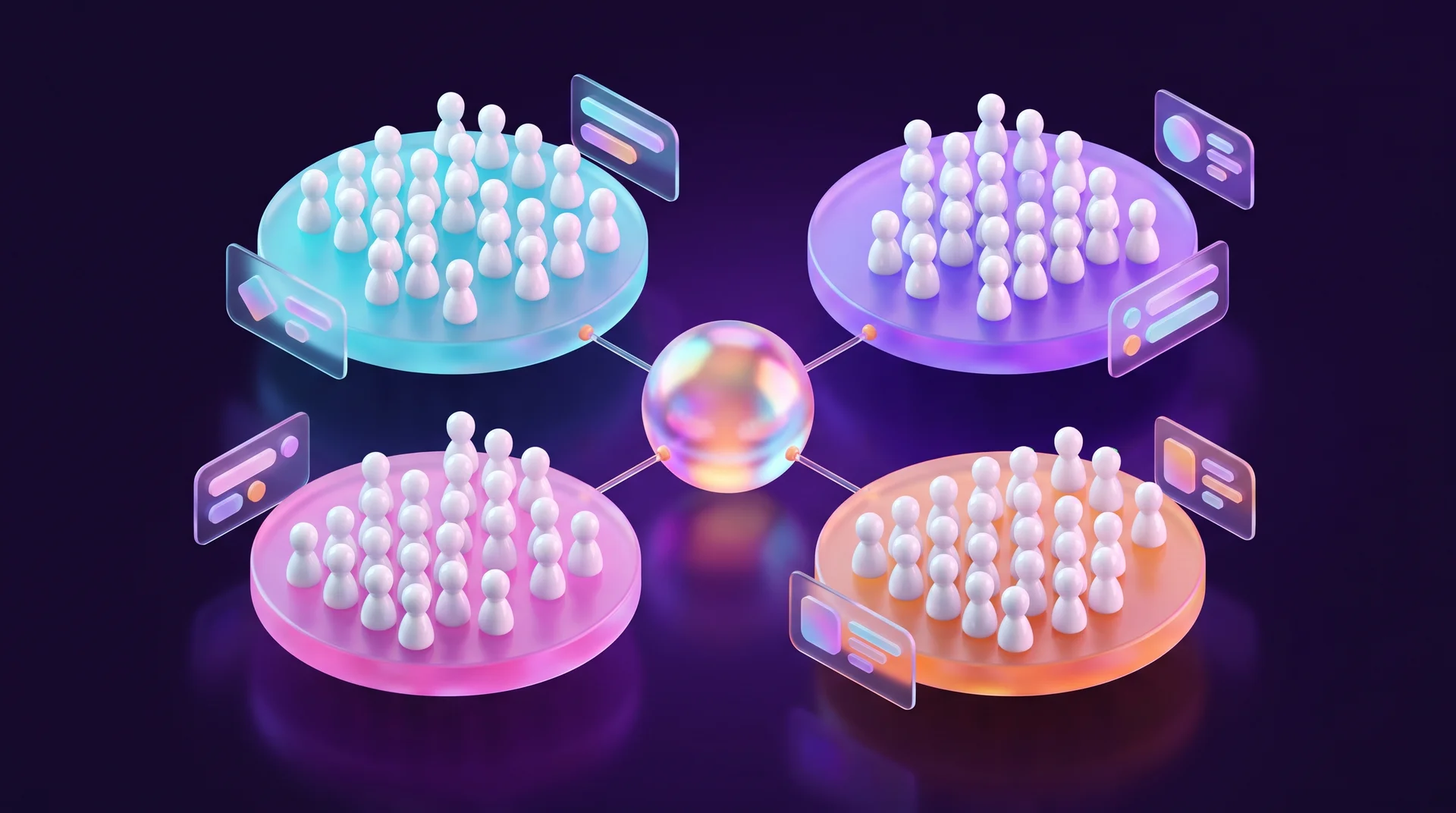
Different customer groups make decisions in different ways, so the same message does not work equally well on all of them. Once you understand which segments make up your target audience and what characterizes each one, you can create messages that interest every group.
Four approaches to segmentation
- Geographic. City, region or radius around the business. Especially important for local businesses: a restaurant in Lisbon should not pay for impressions in the Algarve.
- Demographic. Age, gender, marital status, estimated income and language.
- Behavioral. What the user did: visited the pricing page, abandoned a cart, bought before, opened a newsletter. This is also where the sales funnel stage comes in.
- Psychographic. Motivations, values and decision-making style: who is after the lowest price, who wants quality and who wants speed.
The choice depends on the product and the length of the sales cycle. In real estate, for example, it makes sense to segment by life stage and purchase goal: families with children care about schools, kindergartens and neighborhood safety; older buyers care about the developer's reliability and certainty in the deal; investors care about yield and speed.
Audiences on ad platforms
- Meta Ads. Custom Audiences from a customer list or website visitors, Lookalike Audiences that find people similar to your existing customers, and Advantage+ audience, where the algorithm expands the audience on its own based on the signals you give it.
- Google Ads. Customer Match from customer lists, remarketing audiences from website visitors and audiences based on search intent. In Performance Max and Demand Gen campaigns, audiences act as "signals" that steer the system.
- CRM and BI systems. Internal segmentation by customer value, purchase frequency and traffic source, from which you export lists to the platforms.
How many segments you need
On a small budget, a few large segments beat many small ones. Each segment needs enough data for the algorithm to learn, so two to four segments are a good starting point. Proper segmentation improves not only ad response but also budget efficiency: fewer irrelevant impressions, more inquiries and a lower customer acquisition cost.
Step 3: Creative and a landing page for each segment
For each group, write a separate value proposition and adapt the ad copy and visuals to it.
Example: one project, four messages
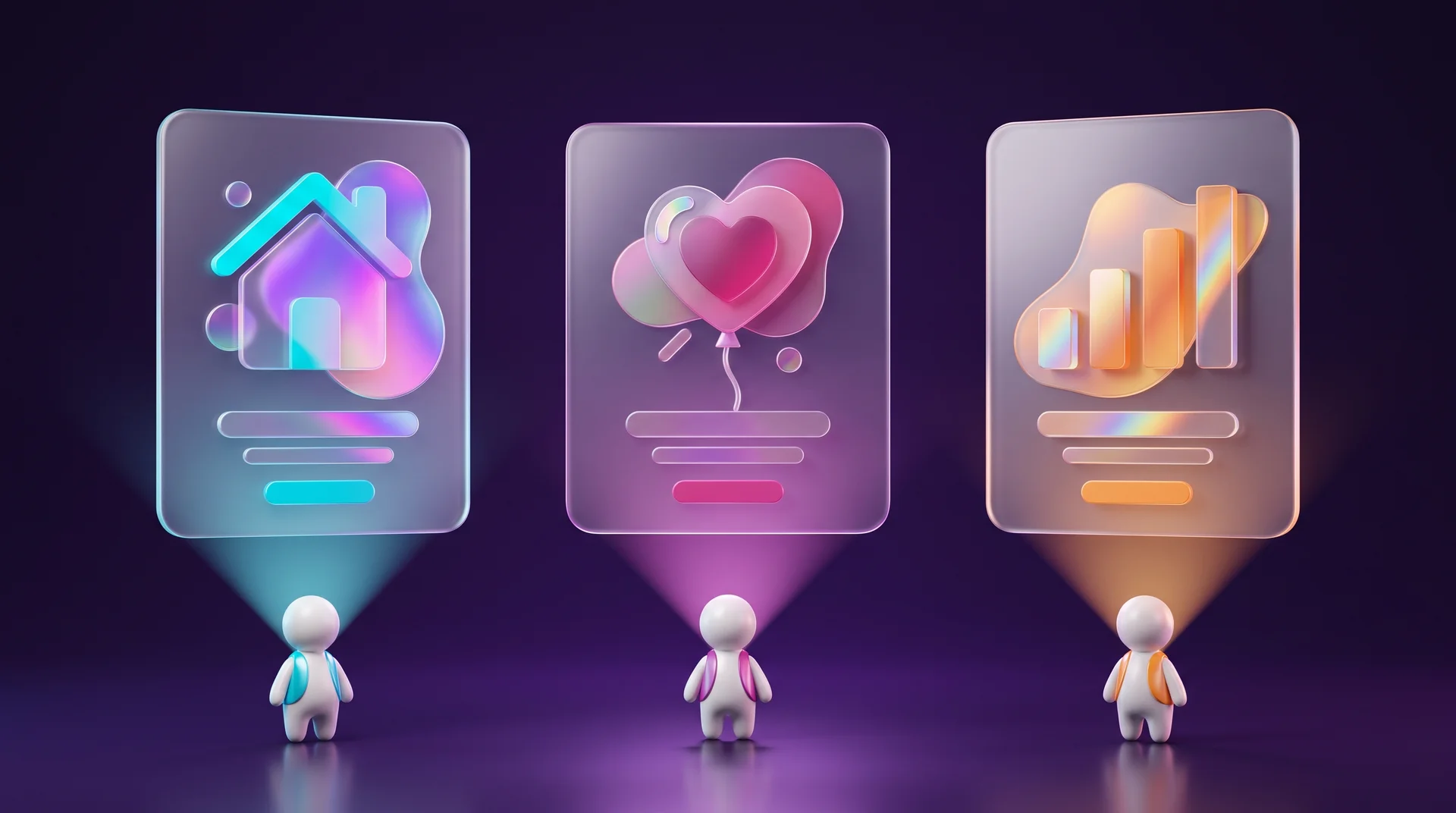
Say a developer is marketing a new residential project:
- For young families: schools and kindergartens within walking distance, a car-free inner courtyard, apartments with an extra room.
- For older couples upgrading their home: the developer's reliability, previous projects delivered on time, elevators and accessibility.
- For first-time buyers: financing options, a comparison of mortgage payments versus rent, and what is included in the price.
- For investors: rental demand in the area, transport and development plans, and small units that are easy to rent out.
It is the same project and the same apartments, but each segment hears what matters to it. This approach makes the communication more relevant and aligns it with each group's expectations.
Dynamic creative
There is no need to design every version by hand. Ad platforms let you generate many versions by combining components:
- Responsive search ads in Google Ads: up to 15 headlines and 4 descriptions, and the system picks the right combination for each search.
- Advantage+ creative and catalog ads on Meta: automatic adjustment of format, cropping and image, and showing products based on what the user viewed on your site.
- Templates in design tools: Figma or Canva with shared components, so you swap the headline and image and get a new version with consistent design.
A landing page that continues the message
Personalization that ends at the click is only half the job. If the ad promised "kindergartens within walking distance", the landing page should open with exactly that message, not the generic home page. You can build a separate page for each segment, or one page that changes its headline, image and call to action based on a UTM parameter or traffic source. In Webflow you do this with Webflow Optimize, and in WordPress with dedicated plugins or custom code. We covered the structure of a page that converts in our guide to landing page design.
Step 4: Testing and optimization
Even well-built personalization needs testing. Not every hypothesis holds up in reality: sometimes the segment that was "sure to work" brings expensive leads, and a segment that looked secondary turns out to be the most profitable.
How to test
- Built-in platform tests. Meta has an A/B test tool that splits the audience into non-overlapping groups. Google Ads has Experiments for comparing campaign settings.
- Change one thing at a time. If you change the headline, the image and the audience all at once, you cannot tell what made the difference.
- Give the test time and data. A test stopped after two days and twenty clicks proves nothing. Wait for enough conversions to draw a conclusion.
- Test the landing page too. Sometimes the problem is not the ad but the page it leads to.
Measure the whole funnel, not just CTR
The most common mistake is judging a campaign by click-through rate (CTR). It shows interest in the ad but does not guarantee results. A provocative ad can get lots of clicks and zero inquiries. So measure across the entire funnel:
- conversion rate from click to lead;
- cost per lead (CPL) and cost per acquisition (CPA);
- the share of leads that became customers, based on CRM data;
- return on ad spend (ROAS) and return on investment (ROI).
To see this picture, you need to connect the platform, the website and the CRM so that every lead is stored with its traffic source and the campaign that brought it in. Without that connection, you can know what a click cost, but not what a customer cost.
How AI and automation help with personalization
Personalization used to require a lot of manual work. Today, much of it can be handed off to automated tools.

What you can hand off to tools
- In-platform optimization. Meta's and Google's bidding and audience systems learn on their own which combination of audience, ad and placement drives conversions, and shift budget toward it. They work better the higher the quality of the conversion signals you send them.
- Language models for writing variations. ChatGPT, Claude or Gemini can suggest several versions for each segment within minutes. Give them a detailed brief about the audience and the offer, and always review the copy: models still make grammar mistakes in some languages and produce phrasing that sounds like a translation.
- Image and video generators. Tools like Gemini and Midjourney, as well as the tools built into ad platforms, create variations of backgrounds and images. Pay attention to rights and to labeling AI-generated content according to platform policy.
- Automation between systems. With n8n, Make or Zapier you can move a lead from the form to the CRM, tag it by segment, update an audience list on the ad platform and send a tailored follow-up message, without anyone copying data by hand.
What still needs a human
Strategy, customer understanding and judgment. AI is good at producing variations and optimizing, but it does not know what your business promises, what you are allowed to say in your industry, or where the line runs between a precise message and an intrusive one.
Personalized advertising and the law: what to know
Privacy: GDPR and data protection laws
Data protection laws such as the EU's GDPR give regulators broad enforcement powers and set heavy fines. In practice, a business that collects data for advertising needs to know what databases it holds, publish a clear privacy policy, collect only what is truly necessary and secure the information. Customer lists uploaded to Meta or Google are hashed before matching, but responsibility for having collected them lawfully stays with you. When in doubt, consult a lawyer who specializes in privacy.
Anti-spam rules
Anti-spam and e-privacy laws, such as the EU ePrivacy rules and the US CAN-SPAM Act, restrict sending marketing messages by email, SMS and automated messaging without proper consent, and require a simple way to opt out. Violations can bring fines and damages claims. That is why a marketing consent checkbox on your website form is not just a convenience but legal protection.
Sensitive topics
Meta has removed detailed targeting options related to health, religion, sexual orientation and politics, and Google restricts personalized advertising in sensitive categories such as health, financial status and religion. Even when a tool allows it, avoid messages that show customers how much you know about them. "We noticed you're pregnant" is a classic example of personalization that turns into a breach of trust.
Languages and audiences
Many markets are multilingual. Language matching is one of the simplest and most effective forms of personalization, provided the ad and the landing page are in the same language. An ad in one language that leads to a page in another loses most of its advantage. And since most browsing happens on mobile and many customers prefer to talk on WhatsApp, a WhatsApp call to action often works better than a long form.
Common personalized advertising mistakes
- Too many segments too early. Ten small audiences on a budget of a few thousand dollars a month do not give the algorithm enough data. Start with two to four.
- Personalization without data. "Segments" built on gut feeling rather than real data from your CRM and analytics.
- Measuring by CTR alone. Cheap clicks that do not turn into inquiries are waste, not success.
- A personalized ad with a generic landing page. The message breaks the moment the user clicks, and they do not find what was promised.
- Crossing the privacy line. Messages that reveal too much knowledge about the customer, or using lists without consent.
- Impatient testing. Stopping a test after a day or two and changing everything every week, so the system never gets a chance to learn.
- No CRM connection. Without tracking what happened to the leads, you cannot know which segment actually brings customers.
- Unedited AI copy. Language mistakes in an ad damage brand credibility more than any time saved.
How RJL Studio helps build personalized advertising
At RJL Studio we build the entire chain personalization needs: we set up the Meta Pixel with the Conversions API and Google Ads tags, connect forms and WhatsApp to your CRM with n8n, Make or Zapier, build audiences from your business data, and design landing pages in Webflow and WordPress that continue each ad's message. Then we measure results across the whole funnel and improve with every round.
Want your advertising to speak to every customer group in its own language? Read about our campaign and social media marketing services, our automation and integration services, or get in touch and we will get back to you.
Personalized advertising FAQ
What is the difference between personalized advertising and regular targeting?
Targeting decides who sees the ad. Personalized advertising also decides what each group sees: a different message, image, offer and landing page for each segment. You can target well and still show everyone the same ad, and then you miss most of the benefit.
Is personalized advertising right for a small business?
Yes. A small business can start with two or three segments, a customer list from the CRM and a few ad variations. The built-in tools in Meta and Google are enough for this stage, and you do not need a data team.
How much budget do you need to get started?
There is no one number that fits everyone. The key rule is that each segment gets enough budget to accumulate conversions you can learn from. If your budget is small, reduce the number of segments instead of spreading it across many audiences.
Is it allowed to upload a customer list to Meta or Google?
Yes, provided the data was collected lawfully and customers know the information is used for advertising. The platforms hash the list before matching, but responsibility for consent and for securing the database stays with the business, especially under data protection laws such as the GDPR.
How do you know personalization is working?
Compare the results of the personalized version against the generic version in an A/B test, and measure not only clicks but also cost per lead, the share of leads that became customers and return on ad spend. If the personalized segment brings customers at a lower cost, personalization is working.
Disclaimer: blog content is for general information and learning only and is accurate as of its publication date. It is not professional, legal, financial or business advice, nor a recommendation or call to take any action. Any use of this information is at the reader's own risk, and we accept no liability for any resulting loss. Links to external websites and tools are provided for convenience only. We recommend consulting a qualified professional before making decisions.