


Lead Magnets: What They Are and How to Build One
A lead magnet is a fair trade: a business gets a prospect's contact details, and the prospect gets something genuinely useful in return. When that trade is set up well, it brings in qualified leads, builds trust in your brand and opens up your sales funnel without pressuring anyone.
Most business websites rely on a single "Contact us" form. That works for people who are already ready to buy. Everyone else, the people who are still researching, comparing options and learning about the problem, slips through. A lead magnet gives them a reason to leave their details now, long before they are ready to ask for a quote.
In this guide we cover:
- what a lead magnet is and how it works;
- where it sits in the sales funnel and how it is used in B2C and B2B;
- which formats exist and how to choose between them;
- how to create an effective lead magnet and a landing page that converts;
- how to promote it, what to do with leads after the download, and what data protection rules apply;
- how to measure results and which mistakes to avoid.
What is a lead magnet
A lead magnet is a free piece of content or a tool that a prospect receives in exchange for their contact details. It can be a guide with practical tips, a self-assessment checklist, a ready-made template, a video lesson or an on-site calculator.
A good lead magnet delivers real, practical value, but it does not cover the entire topic. Its job is to spark interest and lead to the next step: a consultation call, a quote or a purchase of your core product. That is why it should include a call to action (CTA), a specific offer, contact details and links back to your website. To build trust, it also helps to say who prepared the material and what experience they bring.
How it works in practice
To get the lead magnet, a visitor leaves their details: an email address, a phone number or both. If they left an email, the material is sent to their inbox. If they left a phone number, you can deliver it via WhatsApp or another messenger. Either way, the business gets a lead with clear context: you know exactly what the person was interested in, and that is already half of a sales conversation.
The sign-up form usually lives on your website, on a dedicated landing page or in a pop-up. You can also promote the lead magnet on social media and in messaging apps: share a link to the landing page, or collect details directly inside the platform, for example with a Meta lead form or a WhatsApp bot.
The collected contacts go into a database of "cold" leads. From there, the business starts warming them up: an email sequence, tailored messages or a call with a sales rep, until the lead is ready to buy.
Where a lead magnet fits in the sales funnel
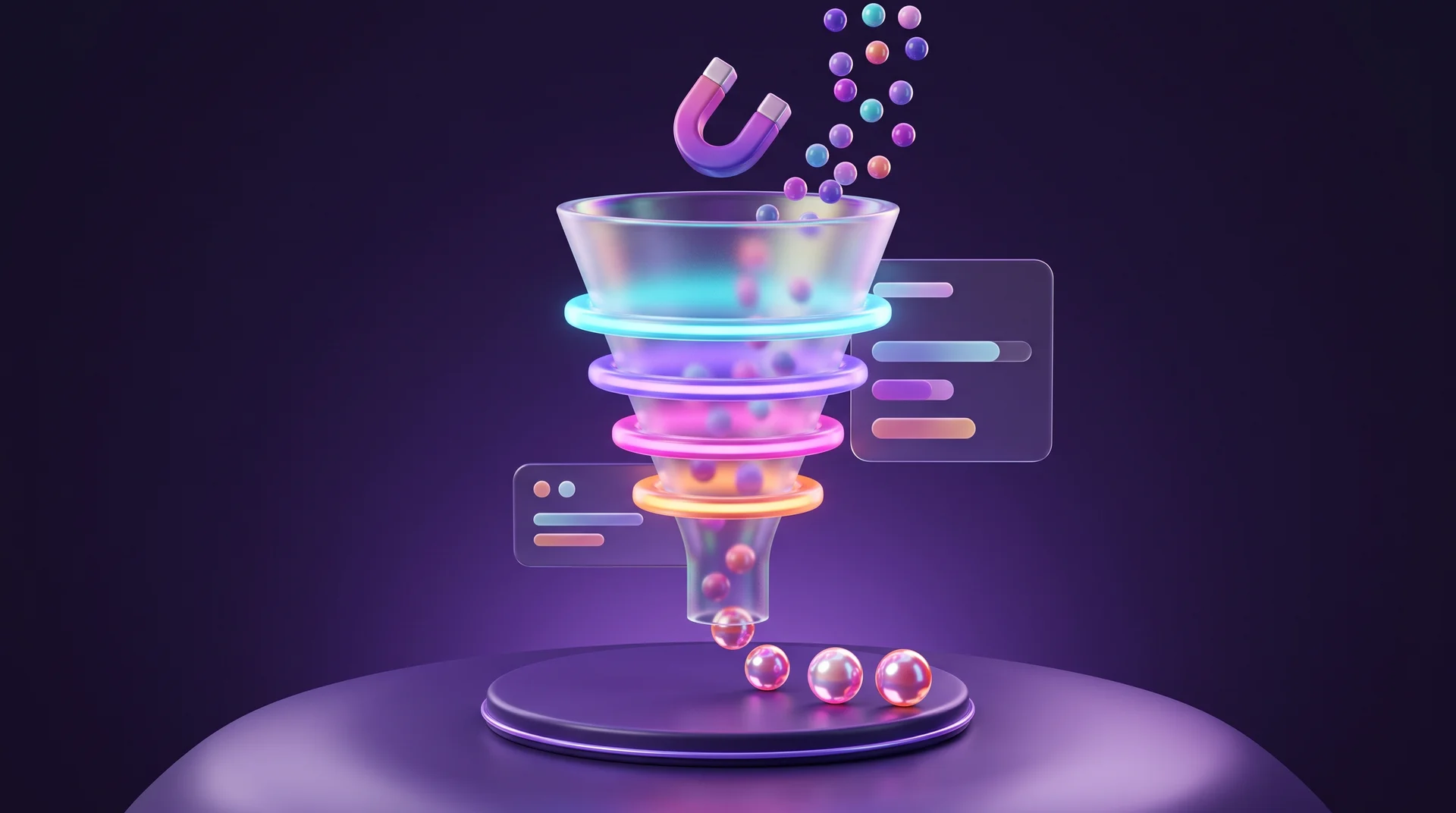
A lead magnet is usually the first step in the funnel. It grows your pool of prospects and builds interest in your paid offers. Marketers often describe this as a four-step value ladder:
1. Lead magnet. A free product that solves one small problem and proves you know what you are talking about.
2. Entry offer (tripwire). A low-cost product that delivers more value than the lead magnet and points towards the core offer. For example, a paid workshop, a basic website audit or a starter package.
3. Core offer. What the business actually sells: a project, a subscription, a full course or an ongoing service.
4. Premium offer. The most expensive option, such as one-to-one support or an extended package. Not every business has one, but many add it over time.
When the lead magnet is done well, people move up the ladder step by step and turn from cold leads into repeat customers.
Lead magnets in B2C and B2B
Lead magnets work both when you sell to consumers (B2C) and when you sell to businesses (B2B), but they are built differently.
In B2C the audience is broad, decisions are relatively quick and the lead magnet needs to be simple and instant: a first-order discount code, a checklist, a short quiz with a personal result. Speed, mobile experience and an easy way to receive the material, such as a messenger, matter most here.
In B2B the lead magnet is created for people in specific roles and for decision-makers inside a company. It has to solve a real professional problem: save time, reduce risk, or help justify a budget to management. That is why B2B forms often ask for job title and company size as well, so you can qualify leads and tailor the follow-up.
Either way, the lead magnet must be directly connected to your core offer and show the expertise of whoever created it. A generic guide that has nothing to do with what you sell will bring sign-ups, but not customers.
Types of lead magnets
Lead magnets come in many formats. Here are the most common ones, grouped into three families.
Text-based lead magnets
Text is the most accessible and convenient format: people read it whenever and wherever they like. It is usually designed as a PDF, but it can also be a gated page on your website or a shared document.
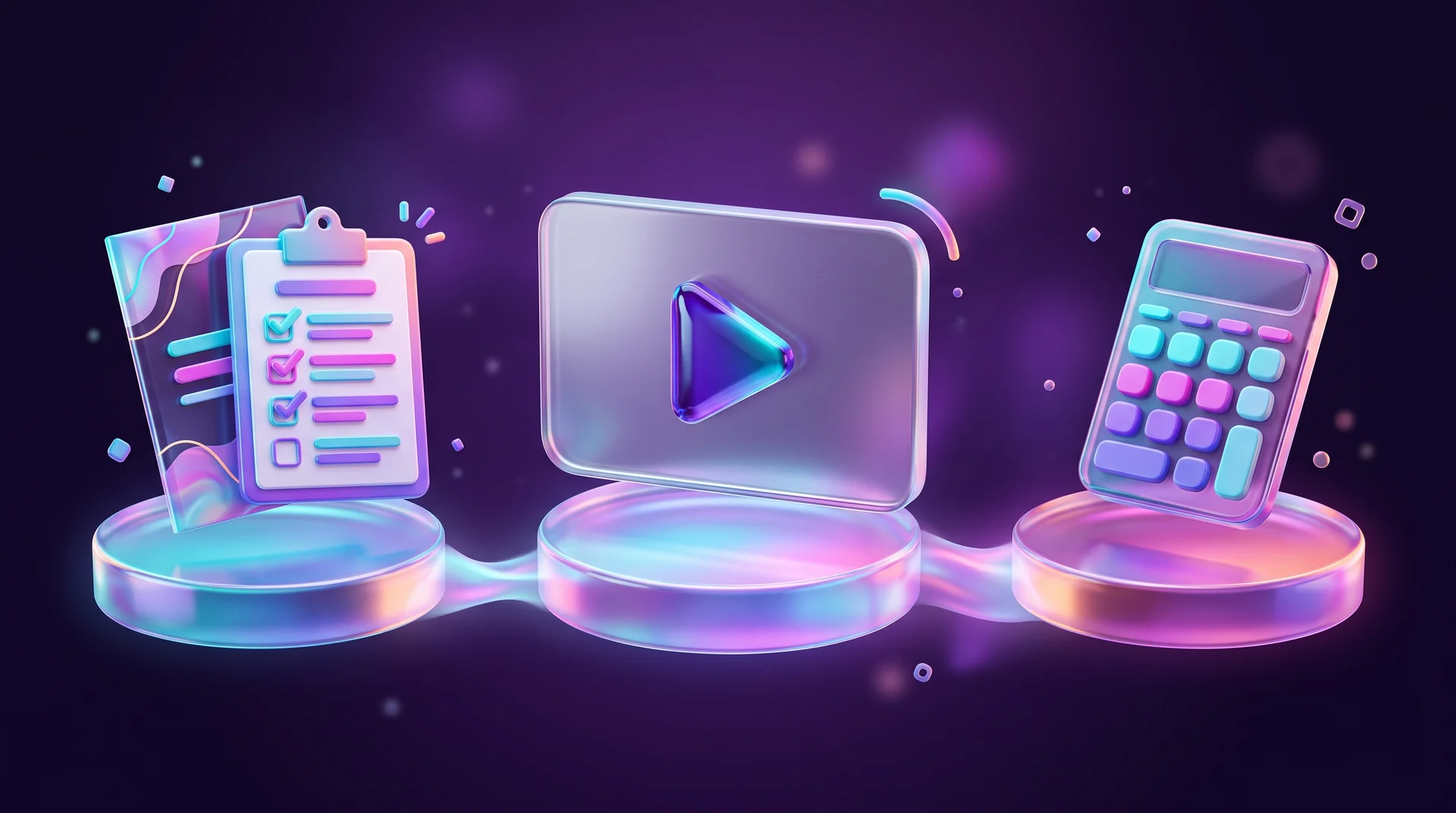
- Checklist. A list of actions or items that helps people make sure they haven't missed anything. For example, "Website launch checklist" or "20 things to check before moving house".
- Step-by-step guide or template. A sequence of actions that leads to a defined result, or a ready-to-use file: a business plan template, a website brief template, a budget spreadsheet.
- Tool list. An overview of services and software that help with a specific task. For example, "Project management tools for small teams".
- In-depth guide or ebook. A larger document that combines instructions, checklists and tips. It takes more work, but it is especially well suited to B2B.
- Research report. The business collected data, such as a survey of customers in its industry, and published part of the findings on its website. The full report, including the most interesting part, is available in exchange for contact details.
Video, webinars and lessons
Video is easy to watch and holds attention, which makes it a good fit for topics that are hard to explain in writing.
- Webinar or live stream. An online session on a specific topic, usually 45–90 minutes. At the end, or somewhere in the middle, the host makes an offer to the audience. The recording is sent to everyone who registered, together with the offer, and it can be reused later as an on-demand webinar.
- Recorded lesson. A focused explanation of 5 to 30 minutes, without live interaction. It also works as a short series sent by email or messenger, one lesson a day.
- Mini-course. A few short lessons with a practical assignment. Keep it simple and make sure it doesn't demand a big time investment.
Interactive tools and service offers
These formats give the prospect a personal result, which is why they often convert better than a PDF.
- Calculator. For example, a cost, ROI or savings calculator. The prospect gets a number that is relevant to them, and you get a lead who has already started thinking about budget.
- Quiz or assessment. A few questions and a tailored result: "Which type of website is right for your business?" At the end, you offer to send the full result by email or messenger.
- Audit or review. An automated or manual check of the prospect's website, ad campaign or process. This is a particularly strong lead magnet for service providers.
- Free consultation or discount code. Simple and direct, and especially effective when the product speaks for itself.
How to create an effective lead magnet
Once you have chosen a format, it's time for the content. These are the principles that keep showing up in lead magnets that actually work.
Pick one narrow topic
A lead magnet should solve exactly one problem. "The complete guide to digital marketing" promises everything and delivers nothing. "7 fields every landing page lead form needs" is specific, quick to consume and directly connected to a service. That way the prospect still has a reason to keep getting to know your business afterwards.
Say who it is for in the title
A title that names the audience filters out irrelevant people before they sign up. "Online store launch checklist for small businesses" beats "Launch checklist". You will get slightly fewer sign-ups, but far more leads that are a good fit for you.
Promise only what you deliver
Don't promise results the lead magnet can't produce. Anything that looks like a marketing trick damages trust, and trust is exactly what the lead magnet is supposed to build. If your guide offers tips, don't call it "the system for doubling your sales".
Give value people can use right away
The best lead magnets are the ones people can put to use the same day. The more complex the topic, the lower the motivation to dig into it. Your lead magnet should help solve the problem, not bury the reader in detail.
Show your expertise
Use knowledge only you have: real-world examples, mistakes you have seen clients make, numbers from your own projects. Bring in an outside expert if you need to. Generic content that anyone can find for free with a single search is not worth handing over an email address for.
Keep it short and include one offer
Respect your audience's time: no filler and no vague statements. And include one clear offer. You can mention it several times, at the beginning, in the middle and at the end, but it should always be the same offer. If you are offering a consultation call, don't add a newsletter invitation and a store discount code next to it.
Content before design, and regular updates
Design should serve the content and the offer, not turn into a work of art. That said, a well-structured document with consistent branding signals professionalism. And don't forget to update it: if the topic changes, such as tools, prices or regulations, revisit your lead magnet every few months. A lead magnet that recommends a tool that no longer exists hurts your credibility.
The landing page and form: where it succeeds or fails
Even the best lead magnet won't bring in leads if the page presenting it is weak. A lead magnet landing page is different from a regular sales page: it is short and has a single goal, getting the visitor to leave their details.
Page structure
- A headline that says what people get and who it is for.
- Three or four bullet points about what's inside, or what readers will be able to do afterwards.
- An image of the lead magnet: the guide cover, a screenshot of the calculator or a frame from the lesson.
- A short form and a button with clear wording, such as "Send me the checklist" instead of "Submit". There is more on button copy in our guide to website button design.
- Trust signals: who you are, a few words about your experience, and a promise not to send spam.
We cover the general principles of landing pages, such as hierarchy, mobile and calls to action, in our guide to landing page design.
How many fields to ask for
Every extra field lowers your conversion rate. In B2C, a name and email, or a name and phone number, are enough. In B2B you can add job title or company size, but only if you will genuinely use that information to qualify leads or tailor the follow-up. Don't ask for details "just in case".
Delivery and the thank-you page
Decide in advance how the lead magnet reaches the prospect: by email, via a messenger, or as an instant download on the thank-you page. Email delivery verifies that the address is real. Messenger delivery is fast and familiar to many audiences, but it requires a properly configured WhatsApp Business setup and clear opt-in for receiving messages, as we explain in our guide to messenger marketing.
The thank-you page is not the end of the road. It is the best place to suggest the next step, such as booking a short call or reading a case study, because the prospect has just shown interest.
Mobile first, and language
For most businesses, the majority of landing page traffic now comes from phones. Test the page on mobile before you put campaign budget behind it: the form should be easy to fill in with a thumb, the phone field should open a numeric keypad, and the PDF should be readable on a small screen. If you serve several markets, localise the page, the form, the error messages and the file itself, rather than sending everyone to a single English version. And build it accessibly: aim for WCAG 2.1 AA, which is also the benchmark behind the European Accessibility Act for many consumer-facing digital services in the EU.
How to promote a lead magnet
A lead magnet that nobody sees won't bring in a single lead. These are the main channels:
- Your website and blog. Add the lead magnet at the end of related articles, in a sidebar and in a pop-up that is triggered by behaviour rather than appearing the moment someone lands. An article that brings in organic traffic from Google, paired with a lead magnet that continues the topic, is one of the most effective combinations there is.
- Paid ads on Meta. On Facebook and Instagram you can send people to a landing page or use an Instant Form that opens inside the app and is pre-filled automatically. Instant Forms tend to bring cheaper leads, but sometimes of lower quality, so it is worth adding a qualifying question.
- Google Ads. A good fit when people are actively searching for a solution to the problem your lead magnet solves. You can send traffic to a landing page or add a lead form directly to the ad.
- Organic social media. In the post, simply explain what people can do on the page and what they get in return, without a pushy tone. "Answer five questions and get a personal recommendation" works better than "Sign up now!".
- WhatsApp and other messengers. A click-to-chat link with a pre-filled message, a QR code in your shop or at an event, or a bot that offers the lead magnet at the start of a conversation.
- Partnerships. A joint webinar with a complementary business, or distribution to a partner's list, with the appropriate consent in place.
A tip for campaigns: the landing page behind your ads should be especially short. People who arrive from an ad want to do what they were promised, download the file or take the quiz, not read about every advantage of your company. For ideas on connecting your lead magnet to tailored audiences, see our guide to personalised advertising.
After the download: lead nurturing, automation and data protection
Many businesses invest in a lead magnet, collect hundreds of email addresses, and stop there. That is the most expensive mistake of all: without a structured follow-up, a cold lead stays cold.
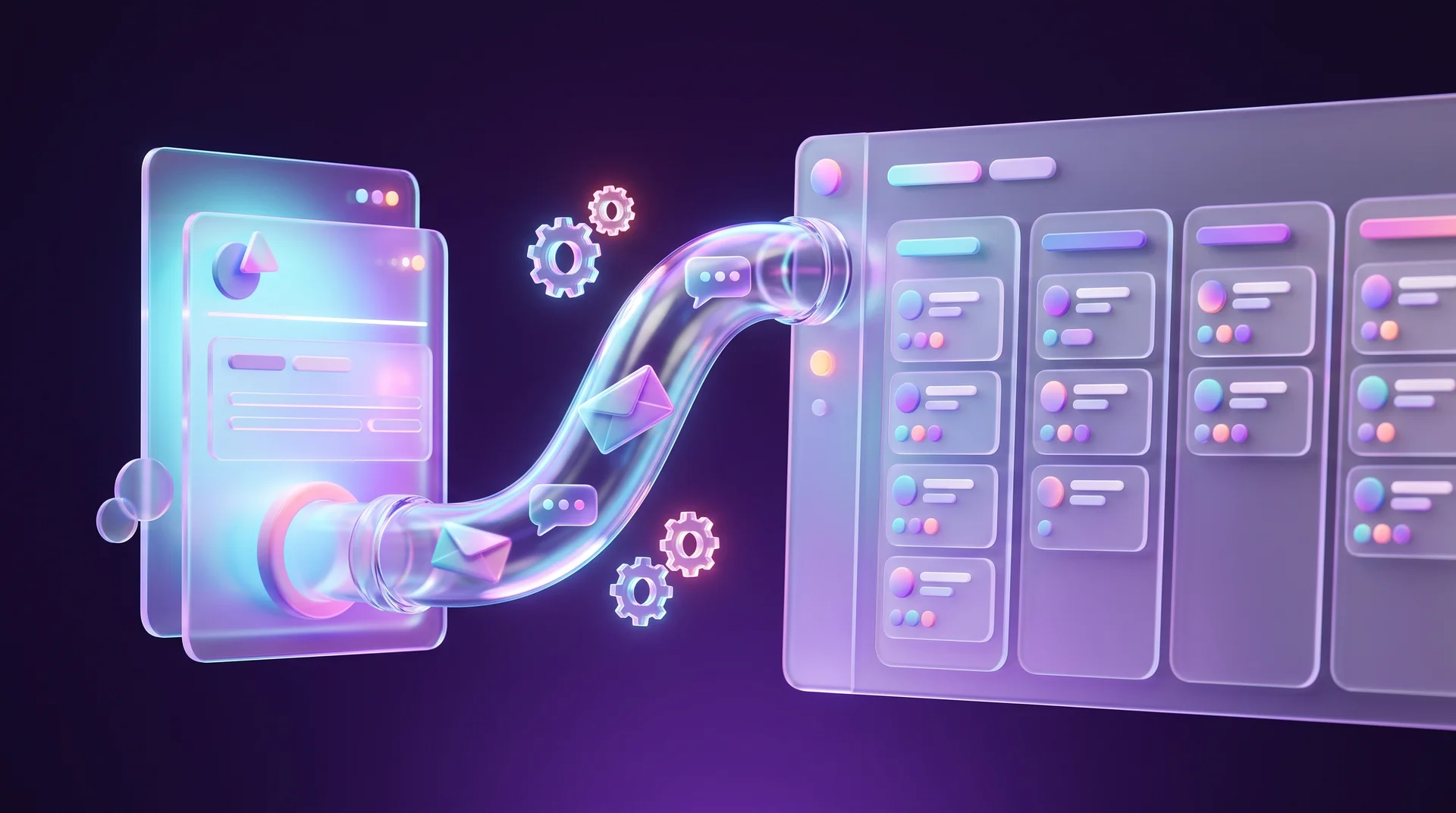
A nurture sequence
Plan a short sequence of 3–5 messages by email or messenger over one to two weeks:
1. Immediately: the lead magnet itself and a short thank-you.
2. After a day or two: an extra tip that complements the lead magnet, or an open question: "Did you manage to put it into practice?"
3. A few days later: a case study or an example of how you helped a similar business.
4. To finish: one clear offer, such as a consultation call, an entry offer or a quote.
Anyone who replied, opened or clicked gets personal attention from a sales rep. Everyone else keeps receiving useful content from time to time.
Connecting to your CRM and automation
Every lead should land in your CRM with the important context: which lead magnet they downloaded, which channel they came from (UTM parameters) and when. That way sales knows what to talk about, and marketing knows which lead magnets and channels bring in customers, not just sign-ups. If you haven't chosen a system yet, read our guide to choosing a CRM.
The connection between your website form (Webflow, WordPress or Wix), an email platform such as Mailchimp, Brevo or MailerLite, your CRM and your messenger is built with automation tools such as n8n, Make or Zapier. A typical scenario: form → saved to the CRM with its source → lead magnet sent → nurture sequence starts → sales rep notified about a qualified lead. We explain how to build a scenario like this in our guide to automation with n8n.
What data protection rules require
If you collect leads from people in the EU, two sets of rules matter most. This is a general overview, not legal advice.
- GDPR. You need a lawful basis for processing personal data, and for marketing that is usually consent. Collect only the data you actually need, explain on the form why you are collecting it and what you will do with it, and link to your privacy policy. Consent has to be freely given, specific and unambiguous, so pre-ticked boxes don't count. Keep the database secure, limit who can access it, and make it easy for people to see, correct or delete their data.
- ePrivacy rules on electronic marketing. In most EU countries, sending marketing emails, SMS or automated messages to individuals requires prior opt-in consent. Downloading a guide is not automatic consent to marketing emails. Add a separate, unticked checkbox for updates, keep a record of when and how consent was given, identify who the message is from, and include a simple unsubscribe link in every marketing message. Many businesses also use double opt-in to confirm the address and document consent.
Rules differ in detail between countries and between B2C and B2B contacts. If you collect a lot of data, or sensitive data, it is worth consulting a lawyer who specialises in privacy.
How to measure results and which mistakes to avoid
What to measure
- Landing page conversion rate: the share of visitors who left their details.
- Cost per lead (CPL): how much each lead from a paid campaign cost.
- Open and engagement rates across the nurture sequence.
- Lead-to-customer conversion: how many leads reached a call, a quote and a closed deal.
Track the sign-up in GA4 as a generate_lead event, mark it as a key event, and send the same conversion to Meta and Google Ads. The metric that really matters is the last one: a lead magnet with few sign-ups that brings in customers is worth more than a "viral" one that builds a list of people who will never buy.
Common mistakes
- A lead magnet unrelated to your product. A broad, popular guide brings lots of sign-ups from an audience that isn't a fit.
- Too many form fields. Every unnecessary field lowers conversions and can make people wary.
- No follow-up. Leads pile up in a spreadsheet and nobody contacts them.
- Several offers at once. The prospect doesn't know what the next step is, so they take none.
- Outdated content. A lead magnet with tools that no longer exist or old data hurts your credibility.
- Emailing without consent. Beyond the legal risk, it damages your reputation and your inbox deliverability.
- Not testing on mobile or in every language you serve. A broken form on a phone or a badly localised PDF wipes out the whole investment.
How RJL Studio helps you build a lead magnet that works
At RJL Studio we build the whole system around your lead magnet: a fast, accessible landing page in Webflow or WordPress, a form with proper consent, automatic delivery by email or messenger, a CRM connection that records where each lead came from, and a nurture sequence in n8n, Make or Zapier. We also set up tracking in GA4, Meta and Google Ads, so you know which lead magnets bring in customers, not just sign-ups.
Want your website to become a steady source of leads? Read about our campaigns and social marketing and our automation and integration services, or get in touch and we'll get back to you.
Frequently asked questions
What is the difference between a lead magnet and a regular blog post?
A blog post is open to everyone and brings in traffic. A lead magnet offers extra, practical value, such as a checklist, a template or a calculator, in exchange for contact details. They work best together: an article attracts readers from Google, and a lead magnet at the end of the article turns some of them into leads.
Which type of lead magnet works best for a service business?
Usually a checklist, an audit or a calculator. They are short, directly connected to the service and give the prospect a personal result. An audit of a website, an ad campaign or a process works especially well, because it naturally opens a conversation about what needs fixing.
How many fields should the form have?
As few as possible. In B2C, a name and email, or a name and phone number, are enough. In B2B you can add job title or company size, but only if you will use them to qualify leads or tailor the follow-up. Every unnecessary field lowers your conversion rate.
Can I send marketing emails to people who downloaded my guide?
Only if they explicitly agreed to it. Under EU ePrivacy rules and the GDPR, marketing messages to individuals generally require prior consent. Add a separate, unticked checkbox to the form, keep a record of the consent, and give people a simple way to unsubscribe in every marketing message. This is not legal advice, so check the rules for your country.
How long does it take to set up a lead magnet?
A checklist or a template can be prepared in a few days. The landing page, form, CRM connection and nurture sequence take a few more days of work. A calculator or a webinar takes longer. Start with one simple lead magnet, measure the results, and only then expand.
Disclaimer: blog content is for general information and learning only and is accurate as of its publication date. It is not professional, legal, financial or business advice, nor a recommendation or call to take any action. Any use of this information is at the reader's own risk, and we accept no liability for any resulting loss. Links to external websites and tools are provided for convenience only. We recommend consulting a qualified professional before making decisions.